Location
Retaining Walls Holland Park
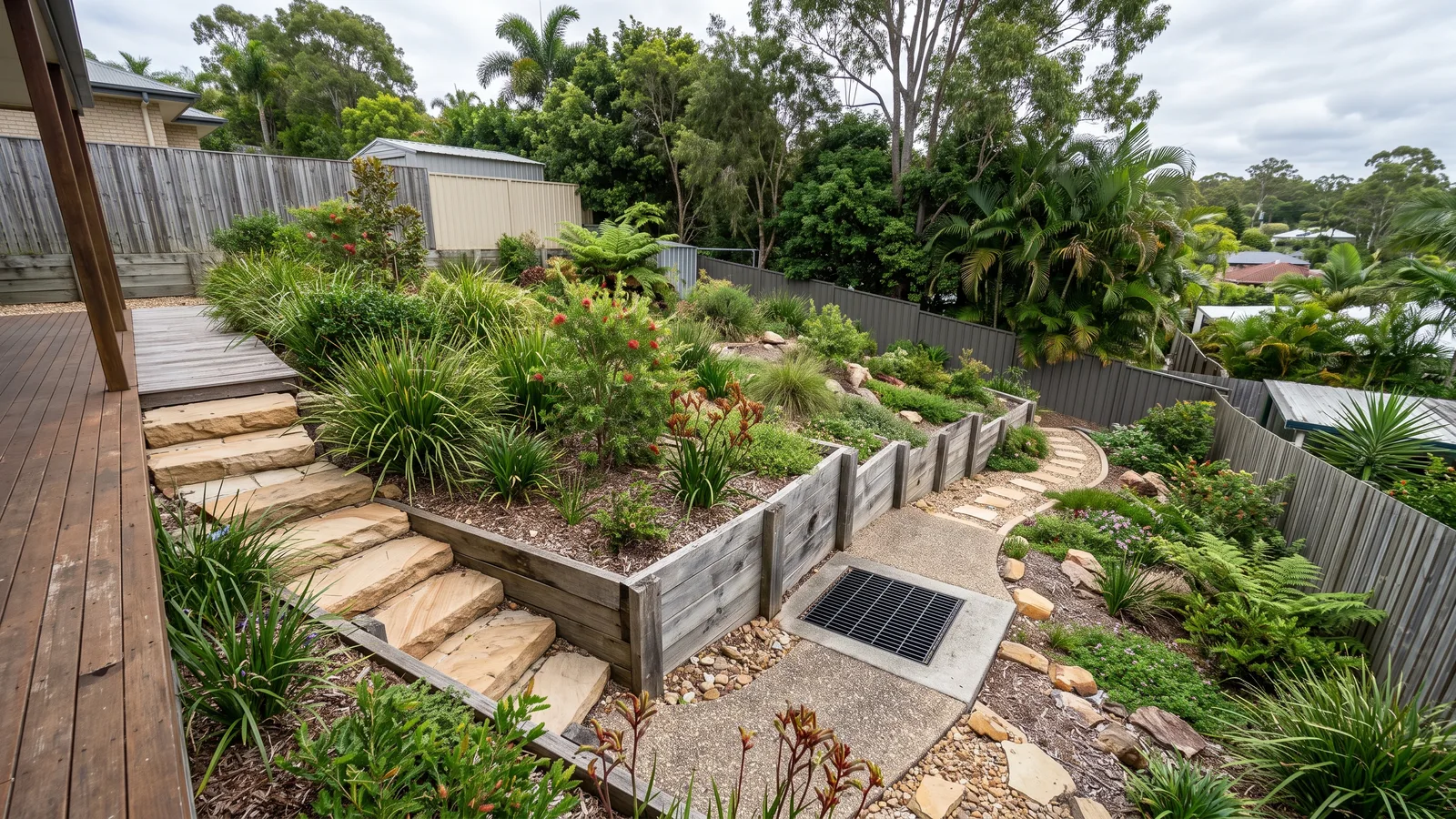
Holland Park retaining walls often manage cross-fall between established homes, garden terraces and side paths.
Brisbane retaining walls in Holland Park: account for cross-fall
Where a block falls sideways, the retained height can change substantially along a wall that looks level at the top. That variation needs to be understood before a replacement is measured or priced. A contractor can establish whether the existing supports remain suitable and how the wall should step or transition at its ends. For a new garden level, decide how the finished ground will meet paths and adjoining spaces. The aim is a useful level area with a resolved edge, rather than a uniform-looking wall that retains different amounts of soil without assessment.
Water may run along the wall
Cross-fall can carry surface water toward one end instead of directly through the face. The low point and final outlet therefore matter as much as the drainage behind the middle of the run. Identify whether a downpipe, paved area or upper lawn adds to that flow. Surface interception and subsoil collection may both be needed. A pipe installed without sufficient understanding of levels can leave the same wet end unresolved. The contractor should explain the full route of collected water before the drainage zone is covered with soil or new landscaping.
Excavation near existing supports
Older paths, house posts and fences can sit close to the proposed wall line. Establish their position before deciding where new foundations will go. Excavation can affect the ground supporting an adjacent structure even when the finished wall will not touch it. A contractor should identify when engineering advice or a changed construction sequence is required. Services also need to be located through the appropriate process rather than guessed from visible fittings. Resolve those constraints early so a chosen material does not force an unsuitable footing into the remaining strip of ground.
Choosing the repair extent
A low timber garden edge with local decay may be repairable, while a wall supporting a raised pad or driveway can require a different approach. Compare the condition of posts and neighbouring bays rather than looking only at the most damaged sleeper. Where replacement is recommended, ask which cause the new design addresses. Concrete, masonry and timber do not have interchangeable foundation requirements. Keep changes to wall height or ground use visible in the proposal, because a replacement that also changes the retained load is a different project from a simple like-for-like repair.
Holland Park's established sloping blocks
Glindemann Park, Holland Park Library and Seville Road State School provide familiar points within Holland Park's established residential setting. Along the surrounding approaches from Logan Road and Tarragindi Road, a side boundary can cross the slope rather than follow it, changing the height retained along one run. A wall may begin as a small garden edge and become more substantial toward the lower end. Side entries can remain narrow despite a larger rear yard, which affects how equipment reaches that end of the job. These patterns help explain why a single overall height is often insufficient for an initial assessment. They do not assign a soil type or approval outcome to the property. The actual ground levels, nearby structures and intended work still govern those decisions.
Measure the shape once, then compare scope
A simple sketch with lengths and changing heights is more useful than repeatedly describing the wall as sloping. Add the nearby path or driveway and the known drainage outlet if visible. The contractor can use that information to plan an inspection and clarify the replacement extent. Compare written quotes for the same demolition, drainage and reinstatement work, and identify any ground conditions still provisional. Once built, keep the drawings and drainage record with the property information. Future paving or garden changes can then be considered against the wall that was actually constructed.