
Service
Retaining wall repairs and replacement decisions
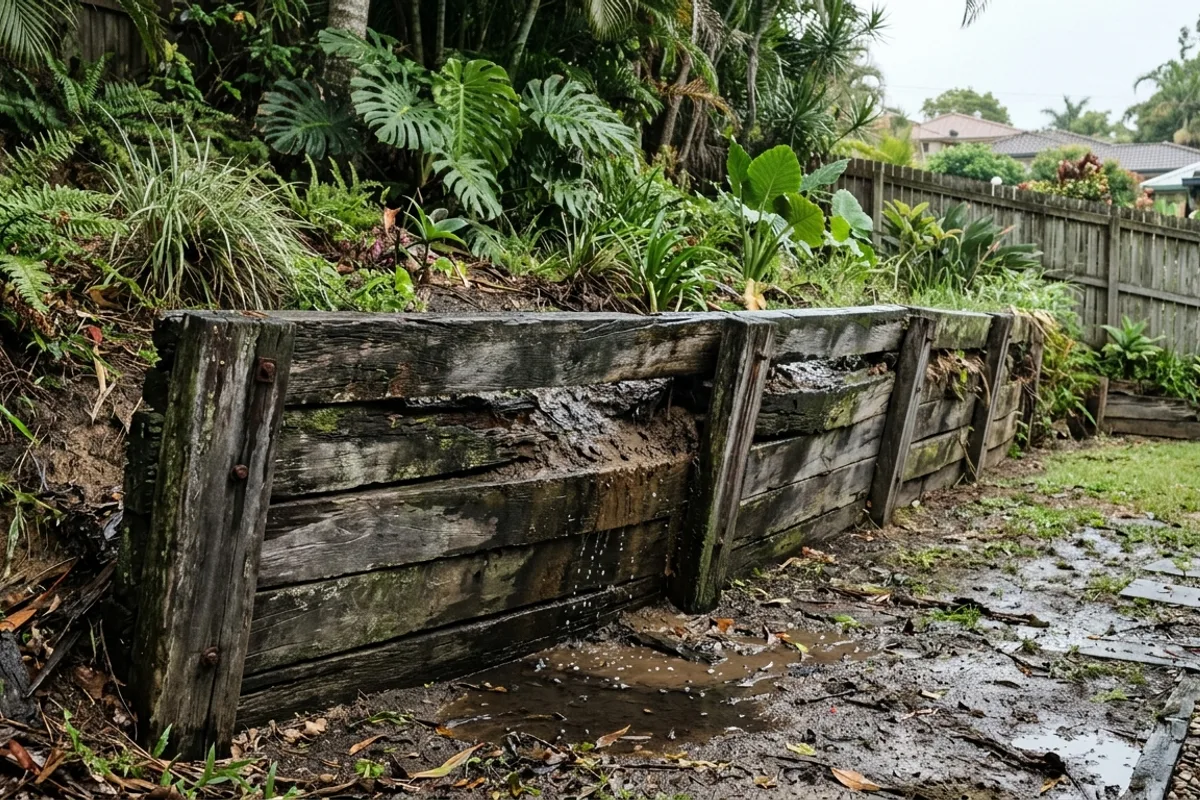
Repair work starts by asking why the wall moved. A leaning sleeper wall, bowed block wall or cracked rendered face may be showing drainage pressure, post failure, footing movement, surcharge or material age.
Request retaining wall helpRetaining wall repairs in Brisbane
A repair should deal with why the wall changed, as well as the damaged material. Leaning posts, bowed sleepers, cracking masonry and displaced stone can have different causes. The most useful starting point is a short history: when the change appeared, whether it followed rain or nearby excavation, and whether it is continuing. A contractor can assess the wall and decide whether a local repair is realistic or a broader replacement needs investigation. An attractive new face is a poor outcome if the original water or ground problem remains behind it.
Local damage or movement of the whole wall
One decayed sleeper between sound supports presents a different problem from several posts leaning together. Similarly, a crack through a rendered coating may need a different investigation from movement through the masonry underneath. The pattern matters. Record where the change starts and stops and whether adjoining paths, fences or garden levels have also shifted. A site assessment can establish what remains serviceable. Avoid relying on a photograph alone to decide that the wall is safe or that every part must be replaced; the buried structure may tell a different story.
Water and loss of supporting ground
Water pressure can push a wall forward, while erosion can remove the material supporting it. Repair work may therefore involve the drainage behind the wall, the source of surface runoff or the base itself. These causes should be distinguished before pricing replacement components. If soil has washed through joints or formed a hollow behind the top, adding more garden soil does not explain why it disappeared. A drainage assessment may need to accompany the structural repair. Changes to a downpipe, driveway or garden level can be relevant even when they occurred some distance from the damaged section.
A safe sequence for opening the wall
Removing a failed section changes how the remaining soil is supported. The contractor needs to plan demolition and excavation with that in mind, particularly beside a driveway, path or neighbouring structure. Temporary support or an exclusion area may be needed while the work is assessed or carried out. Keep people and vehicles away from an area showing active movement and seek professional advice. Do not remove posts or dig behind a leaning wall to obtain better photographs. Initial images can be taken from a safe position and supplemented during the contractor's inspection.
When a partial repair is worth considering
A limited repair can make sense where the fault is isolated and the surrounding wall remains suitable for its current load. The scope should identify the retained portions and explain how the repaired section will connect to them. Compatibility matters when old sleeper dimensions or post systems differ from current products. A small repair becomes less convincing if deterioration continues into adjacent bays or if the whole wall lacks an effective drainage arrangement. Ask what evidence supports the proposed extent of work and which uncertainty can only be resolved after a limited investigation.
Replacement as an opportunity to correct the layout
Replacing a wall gives a chance to reconsider its line, material and finished levels. It may be possible to improve usable garden space or avoid repeating an awkward junction with steps or paving. Those changes also alter the project, so they should be assessed before ordering material. A heavier or taller replacement is not automatically suitable for the old foundations. Engineering and approval requirements depend on the new proposal and site. Keep an essential repair distinct from optional landscaping so you can decide which improvements to include without losing sight of the original fault.
Agreeing on investigation, repair and reinstatement
A clear proposal separates any initial investigation from confirmed construction work. It should identify removal and disposal, the new wall components, correction of the cause and restoration of disturbed surfaces. Where the full condition cannot be known until the wall is opened, agree how additional work will be explained and approved. Keep a record of the completed repair and any maintenance advice. To start, describe the wall material, approximate size, suburb and change you have noticed. A responding contractor can then decide whether more information or an on-site assessment is the appropriate next step.