
Service
Rock and boulder retaining walls for sloping sites
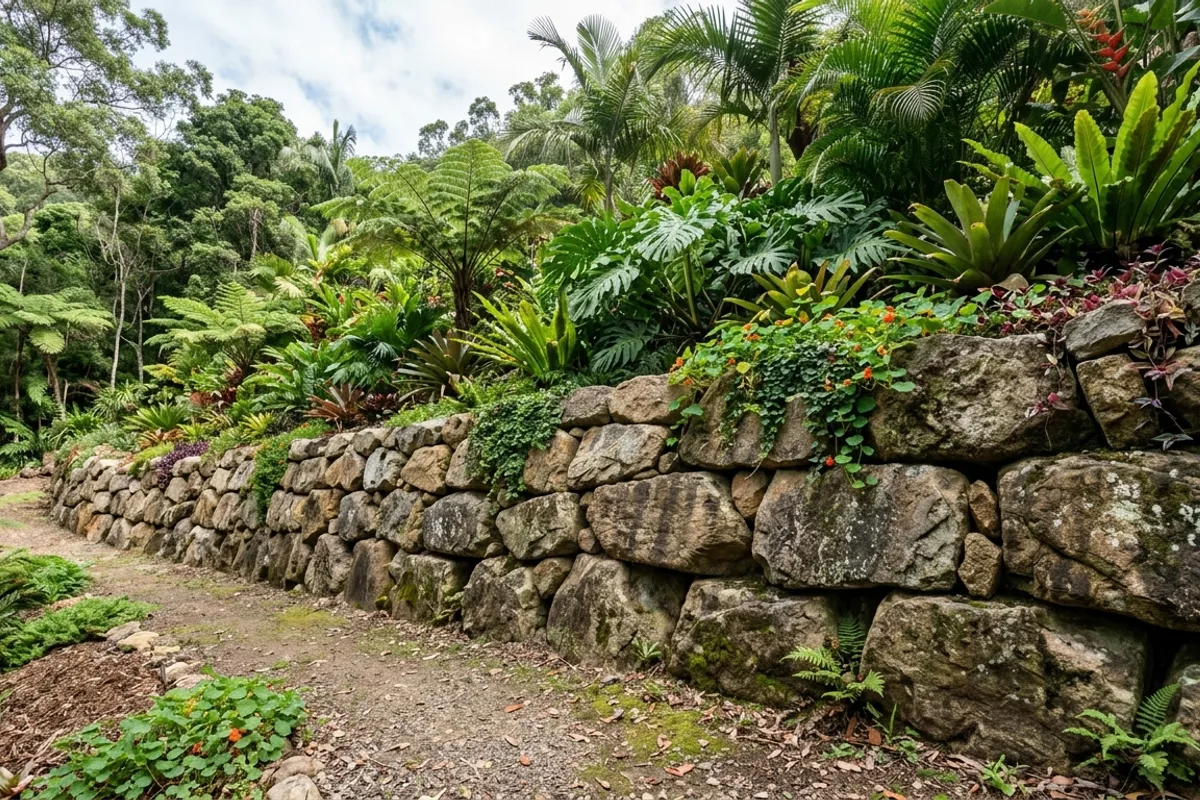
Rock and boulder walls can suit sloping Brisbane gardens where the owner wants a natural face. The wall still needs base preparation, batter, drainage, stone selection and enough access to place heavy material safely.
Request retaining wall helpRock and boulder retaining walls in Brisbane
Natural stone can turn a change in garden level into a textured landscape feature. A boulder wall uses the mass and arrangement of the stones to retain soil, with a backward lean known as batter. It therefore needs a different footprint from a narrow vertical sleeper wall. The useful starting point is how much space the garden can give to the structure. A natural appearance can be a good fit for a broad sloping yard, while a tight boundary may favour a different system.
Space behind and beneath the face
The visible stones are not the full width of the wall. Base preparation, drainage and the backward profile need room within the proposed wall area. Where a garden path must remain usable, compare that available width with the actual wall arrangement before selecting stone. The ground supporting the lowest course matters because movement there affects everything above it. An engineer may need to assess the design when the wall is tall, supports another load or sits in difficult ground. Stacked stone should not be assumed to avoid the approval questions that apply to other retaining materials.
Stone selection and placement
Large stones create a different scale and handling problem from smaller rock. The choice depends partly on whether machinery can reach the wall and position each piece. Access means more than fitting through the gate: the route must also allow movement and work at the face. A restricted site can make a preferred stone size impractical. Discuss corners, ends and changes in height as part of the proposed finish, since natural pieces do not form identical modules. The contractor should explain how the selected material will produce a stable arrangement rather than merely resemble a reference photograph.
Keeping soil behind the stones
Open joints allow water through, but they can also become a route for soil to wash out. A suitable filter layer and drainage backfill help separate fine soil from the open stonework. Water collected from above still needs a managed destination; free-draining construction does not resolve concentrated roof or driveway runoff. Watch for soil deposits at the base, gaps opening behind the upper stones or local hollows in the garden. Those signs can indicate loss of backfill and deserve assessment before more soil is tipped into the void.
Repairing a loose or displaced section
A repair can involve more than moving a stone back into line. The supporting base may have settled, water may have removed material, or the wall may have been overloaded by changes above it. A contractor needs to inspect the failed area together with the adjacent sections. Removing individual rocks without considering how the remaining wall is supported can change the stability of the whole arrangement. Keep people away from a moving section and arrange an assessment. Photographs taken from a safe position can show the extent of movement without requiring someone to stand on the wall.
Landscaping around the finished wall
Planting should fit the structural space rather than force changes to it. Leave access to any drainage inspection points and avoid treating the gaps between stones as convenient places to add soil indiscriminately. Paths, steps and fences near the wall need their own planned relationship to the retained level. If the goal is more usable lawn, compare a single large level change with a terraced arrangement; the latter uses more ground and can introduce interaction between walls. The appropriate layout depends on the site and design, not simply which option looks lower from the front.
What belongs in a rock-wall quote
Stone supply, transport and machine handling can form a substantial part of the work. Compare those items alongside foundation preparation, filter material, drainage, backfill and restoration of the access route. Confirm whether old stone will be reused and whether its suitability must first be assessed. A price for placing new boulders may exclude removing an existing wall or dealing with unsuitable material underneath. Start the enquiry with the wall's purpose, dimensions and available working space. That gives the contractor a basis for deciding whether rock is practical before spending time on a specific stone finish.