
Service
Timber sleeper retaining walls for older Brisbane yards
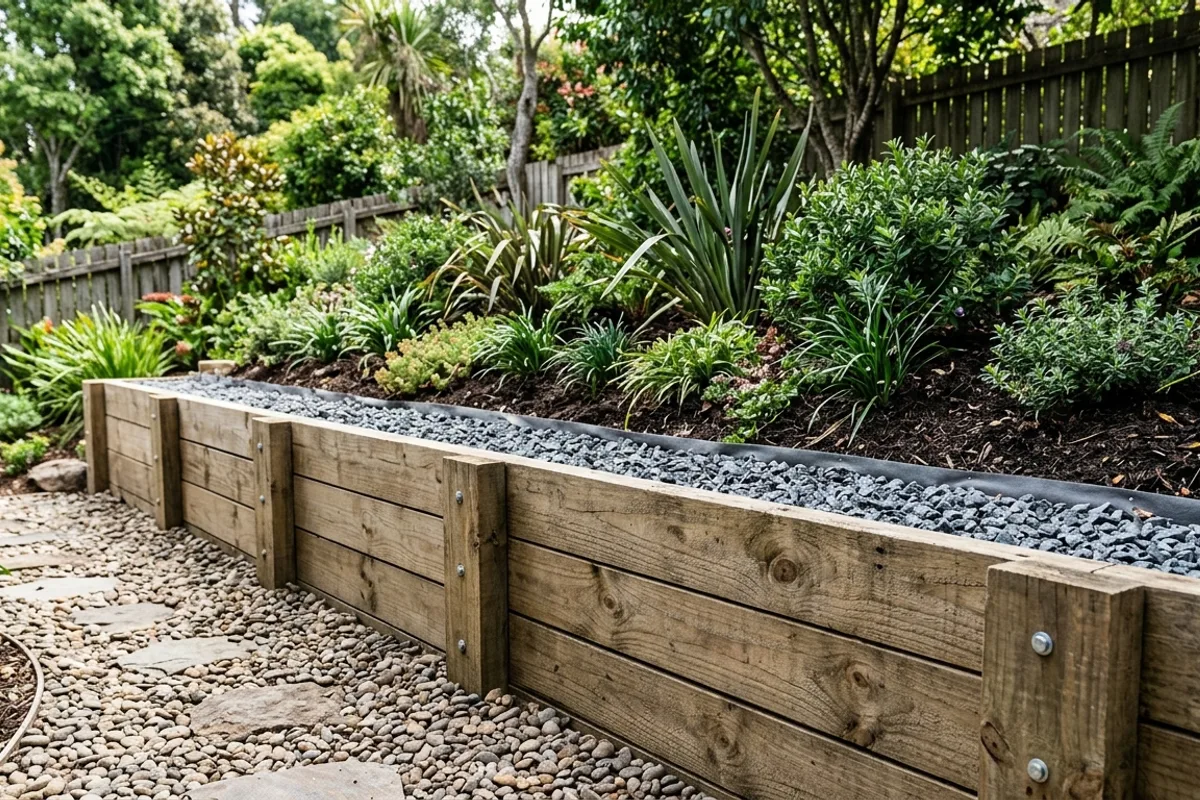
Timber sleepers can be practical for low garden terraces and older yards where budget, access and a softer finish matter. The main questions are treatment class, post condition, drainage and whether the wall is still suitable for timber.
Request retaining wall helpTimber sleeper retaining walls in Brisbane
Timber can suit a low garden terrace where a natural finish and manageable components matter. It is also a familiar material in older Brisbane yards, where a failed section may sit among otherwise established landscaping. The first decision is whether timber remains suitable for the wall's present job. A modest garden edge and a wall supporting a vehicle area are different structures, even if both were originally built from sleepers. A repair assessment should therefore consider the current ground levels and loading before selecting replacement boards.
Finding the part that has failed
A bowed sleeper is not automatically a sleeper-only problem. The upright post may have moved, the buried timber may have decayed, or water pressure may be pushing the whole assembly forward. Inspecting only the dry front face can miss deterioration at the ground line. A contractor can assess the connection between posts and boards and determine how much surrounding material needs to be exposed. Local replacement is more plausible where the remaining structure is sound and the cause is understood. Repeated patches become less useful when several posts or adjoining bays are failing.
Treatment and intended use
Timber must be specified for its exposure, including contact with the ground. The Queensland knowledge base identifies H4 treated pine as an in-ground material; the supplier's treatment information and the wall design still control the actual selection. Treatment is different from a decorative stain, which changes appearance without establishing structural suitability. For a vegetable bed or a place with frequent skin contact, discuss an appropriate timber treatment with the supplier rather than assuming every treated sleeper has the same intended use. Include cut ends and compatible fixings in that discussion.
Water behind a timber wall
Keeping soil from remaining saturated behind the boards is a practical durability measure. A drainage zone can use clean gravel and a filter layer to separate soil from the water path. The collected water then needs somewhere appropriate to go. Paint or waterproofing on the back of a sleeper cannot replace that drainage arrangement. Also check what happens above the wall: irrigation, a downpipe or paving that falls toward the garden bed can continually feed the retained soil. Correcting that source may be part of the work rather than simply installing fresh timber in the same wet position.
Working in an established garden
Timber lengths may be easier to carry through restricted access than heavier wall components, but there still needs to be room to excavate and set posts. Mature planting can obscure the wall line and make removal more complicated. Agree which plants, edging and irrigation are to be retained and where temporary access will run. If the wall is being lowered or moved, the garden levels behind it will also change. That can affect adjacent paving or the base of a fence, so the finished levels belong in the plan before demolition starts.
Repairing one bay or changing material
Keeping timber may preserve the existing garden character and avoid replacing a sound length of wall. Moving to concrete sleepers or masonry can be worth comparing when deterioration is widespread, but the change is more than a new facing. Different materials can require different posts, foundations and handling methods. Ask for the reason behind the recommendation: isolated decay, a changed load or an unsuitable water path each calls for a different response. There is no reliable fixed lifespan to promise from a photograph; exposure, construction and maintenance all influence the result.
Finishing and looking after the replacement
The top edge, exposed ends and junctions with steps deserve attention because they are the parts people see and use. Keep the intended soil level clear so garden additions do not gradually bury more of the wall or obstruct its drainage. After completion, look for new movement, loose connections or water collecting where it did not previously collect. Record the specified timber and any maintenance instructions. For a quote, distinguish supply and installation from removing old posts, disposing of treated timber, reinstating the garden and any design work. Tell the contractor whether you want a small repair assessed or a whole-wall alternative priced.