
Service
Retaining wall drainage and subsoil systems
Drainage is often the reason a wall lasts or starts moving. A new wall, repair or replacement should explain where water comes from, how it is collected behind the wall and where it lawfully exits.
Request retaining wall helpRetaining wall drainage in Brisbane
A wet or moving wall needs the source of water understood before a drain is selected. Rain can enter through the retained soil, run down paving, arrive from a downpipe or collect at a change in ground level. These are different paths and may require different work. Start with when and where the problem appears. Water present only during a storm tells a different story from soil that remains wet in dry weather. A drainage assessment connects those observations to the wall's condition and the available discharge route.
Surface water and subsoil water
Surface drainage intercepts water before it soaks into the backfill. Subsoil drainage collects water already moving through the ground. One system does not necessarily replace the other. For example, a new path falling toward a timber wall can create a puddle at the posts even where a drain exists behind the wall. Altering a paved surface or adding a collection channel may address the immediate inflow; work behind the wall addresses a separate path. The contractor should establish which problem is present rather than proposing more pipe without identifying what it will collect.
How gravel, fabric and pipe work together
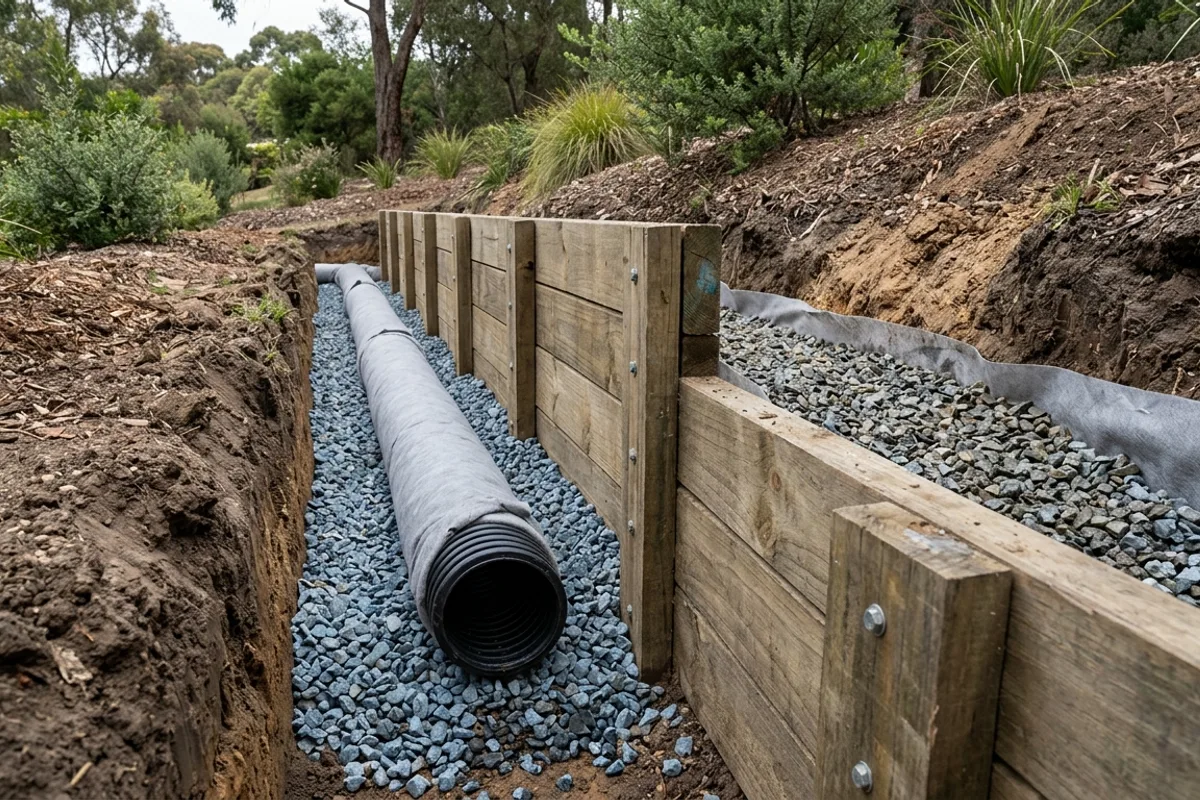
Clean drainage aggregate leaves space for water to move. Geofabric is a filter layer that keeps finer soil from migrating into that space. Slotted agi pipe collects the water and carries it toward the outlet. If soil contaminates the aggregate or the pipe has nowhere to discharge, the drainage zone can stop performing its intended job. Product selection and placement need to suit the wall design and ground. Keep the drainage detail in the construction scope so it is completed as part of the wall, not added as a vague allowance after the face has been built.
Resolve the outlet before excavation
A drain is only useful when the collected water can leave appropriately. The discharge point, level and route influence whether a proposed connection is practical. An existing stormwater pit nearby does not establish that a new connection can simply be made to it. A licensed plumber may be needed for the relevant stormwater work. Where there is no obvious drain, obtain a site-specific solution rather than running an open pipe toward a boundary. Erosion or concentration of water at the outlet can create a new problem below an otherwise well-drained wall.
Investigating an existing wall
Old drainage is often concealed and records may be missing. A contractor may need to inspect accessible outlets, assess surface falls or expose a limited area before describing the full repair. Water staining, blocked weep holes and washed-out soil provide clues, but none alone establishes the condition of buried pipe. Agree on the extent of the investigation and what will be reinstated afterwards. If the wall has moved, drainage work needs to be considered with its structural condition; relieving water does not automatically restore a damaged post or undermined footing.
Maintenance without harming the structure
Keep accessible outlets and surface grates clear of leaves and accumulated soil. After heavy rain, look for a change in where water emerges, new erosion or persistent pooling. Avoid drilling holes through a wall or digging behind it as a first response to dampness: concealed reinforcement, waterproofing or supporting ground may be affected. A contractor can advise whether cleaning, a surface-water correction or more substantial access is appropriate. Save any installation photographs and drainage layout so future maintenance can find the relevant components without exploratory digging along the whole wall.
Defining the repair and its limits
A drainage quote should identify the source being addressed, collection system, discharge work and restoration of surfaces disturbed during access. Where investigation may reveal additional problems, establish how findings and variations will be discussed before extending the work. Ask whether the wall itself has been assessed or whether the proposal is limited to water management. Useful initial information includes the suburb, wall material, when the wet area appears and any recent changes to paving or downpipes. Photos taken safely during or after rain can help show a problem that may disappear before a dry-weather visit.